Havasu Falls
A field guide for taking your kids (or yourself) to see the Havasu Gardens and the Havasupai People
Havasu Falls is the premier waterfall in the Havasu Canyon, a trail that leads into part of the Grand Canyon that is located on native land run by the Havasu Tribe (Havasupai). This field guide is to help you prepare and navigate for an Epic Dadventure.
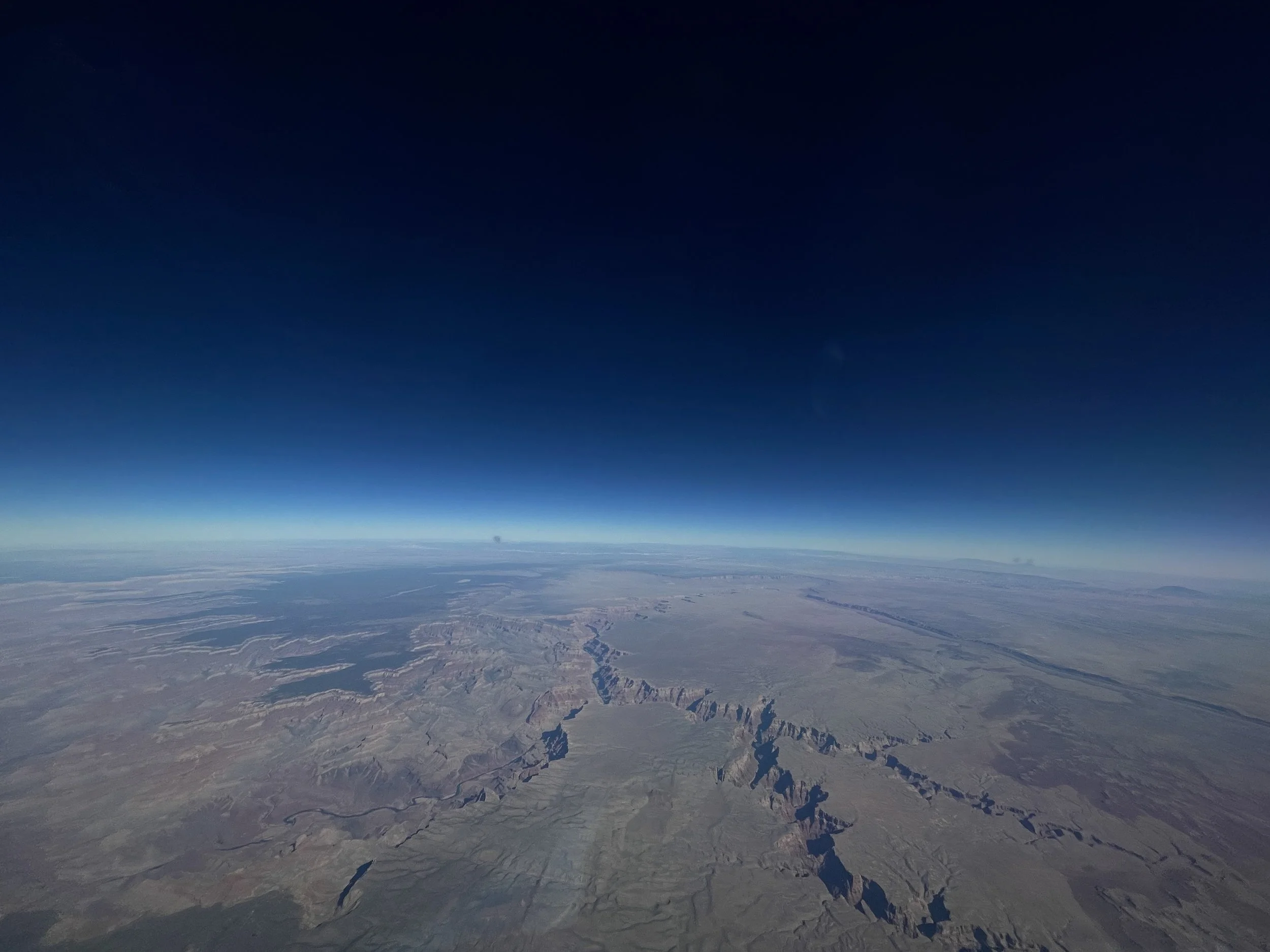
Havasu Canyon from the sky
Please be aware that this is not a casual or easy trek. It is very challenging and you should make sure that you do as much research and preparation as possible. Know that you cannot prepare for everything so make sure your safety and the those of your kids is priority number one.
The journey to Havasu Falls, while arduous and long is one of the most remarkable places on earth. It is a beautiful oasis in the middle of a harsh desert canyon. If you would like to know more about the backstory and history of the region and people, we recommend the book I Am the Grand Canyon by Stephen Hirst. Secondly, if you are planning a trip, we recommend joining one of the many Facebook groups where people and can ask questions and share up to date information and addtional resources. We used this daily for a few weeks prior to make sure that things like weather, closures, emergencies and relevant information were not missed. For instance over the years there have been a few cases of norovirus where many hikers got extremely ill. There have been several major floods in the canyon over the decades but even harsh rains and flash floods can quickly ruin a trip. Even if it means arriving to Havasu Falls to find the beautiful turquoise water turned brown and muddy. It would be quite dissapointing to arrive to paradise and find that it is a muddy river.
Permitting
To start your journey you need to acquire permits. The permitting system is run by the Havasupai and costs $455 per person and is for three nights of camping. There is an option to stay in the lodge located in the Supai village for $2,277 for a four people. Note that Supai village is about 2 miles uphill from waterfalls and best parts of Havasu Creek (Havasu Falls pours into a gorgeous pool and then fills Havasu Creek where all of the campsites are located before falling over the top of Mooney Falls). Our recommendation is to stay in the campground, there are many amazing campsites next to crystal blue water, cascading waterfalls and still pools of moss and tadpoles.
The permitting system can be a bit counterintuitive. The system does not show how many spots are available on each day. Only that there is availability. So if you select your date, you cannot say you’d like to have 3 or 4 people. You must select the date and then add people to your booking for each person.
Once you have your permits, it is recommended that you book a hotel the night before your journey because the trail head for trek is about 1.2 hours from the nearest place to stay and it is critical that you start your descent in the middle of the night or early morning especially if you are there during the summer months. A 2:00 or 3:00 am wake up and hike is not uncommon. We woke up at 3:30 from the Grand Canyon Caverns Inn, left by 4:00 and were hiking by 5:30 in mid-June.
The Grand Canyon Caverns Inn, is the most convenient as this is where you need to check in to get your permits for the hike. They have a 24 hour market and a restaurant that offers a complimentary breakfast for those who are hiking the trail. Note* you need to arrive by 6:00 pm the night before your trek to receive your permits. They give you a tag for your tent, parking permit and wrist bands for all members of your party. The hotel gets its name from the caves that were discovered about a mile behind the property. There is another restaurant and gift shop to the entrance of those caverns where you can book a 30 minute tour or a 1 hour tour 21 stories below the ground. There’s even an option to dine in a small cafe at the depths of the cave.
So now you have your hotel and permits and are ready to start your journey. The drive to the trailhead is a paved road that has wildlife crossing the entire way. We saw elk, horses, rabbits and cattle in the middle of the road on our early morning drive. So be alert and careful. The road dead ends at the parking lot where you will display your permit. Pro tip* bring a well insulated cooler with a block of ice and frozen gatorades, water and other drinks. The trek back is hot and dry and many people run out of water. You don’t want to get to your car and then have a 90 minute drive to something to drink.
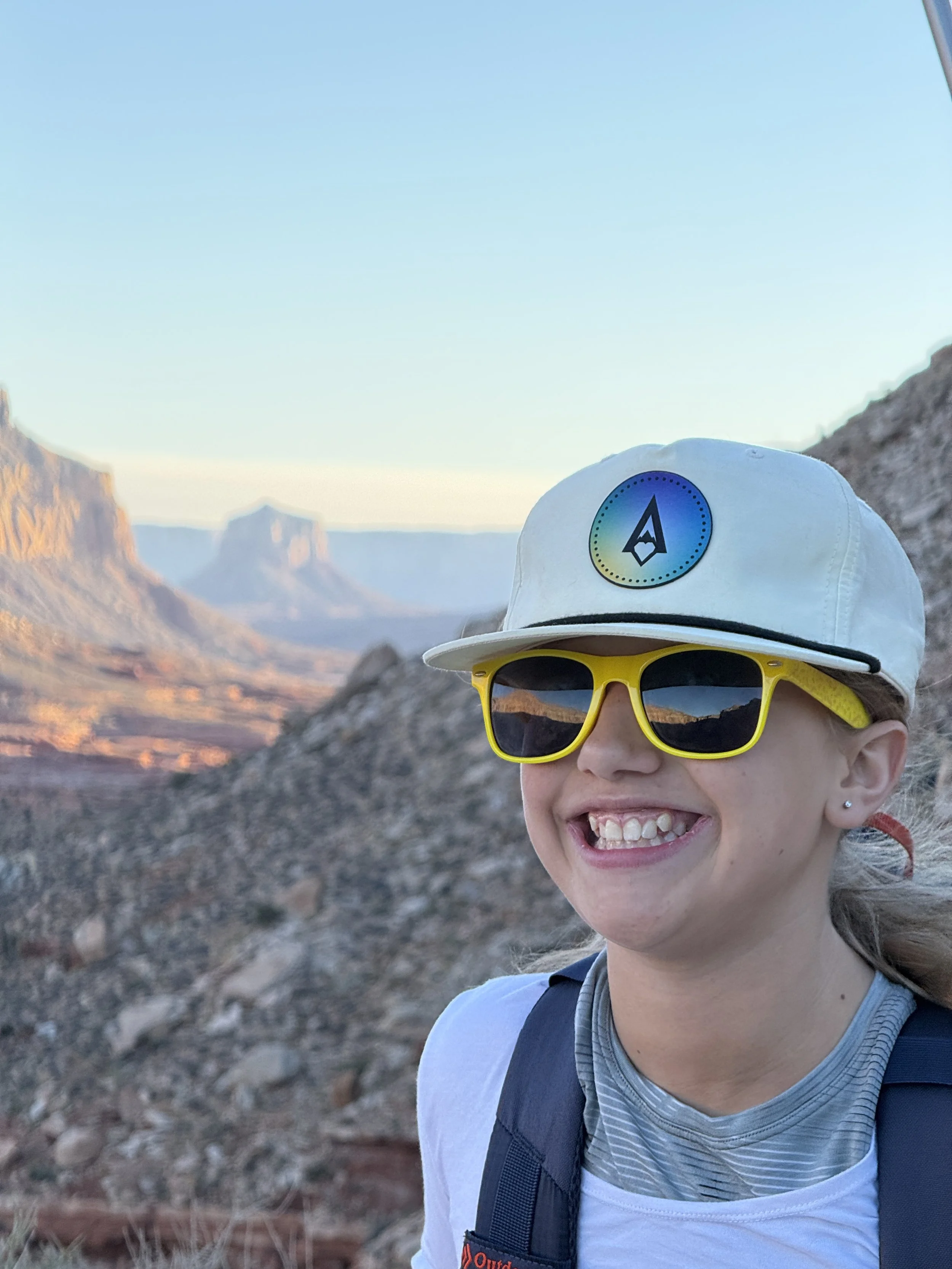
The Hike Down
The hike down starts with a quick 1 mile rocky decent, full of switchbacks down to the canyon floor. The next 6 miles are relatively flat and beautiful but there is no water along the way. The first water is right before you reach the Supai village. So it is recommended that you carry at least 4 liters of water per person both in and out.
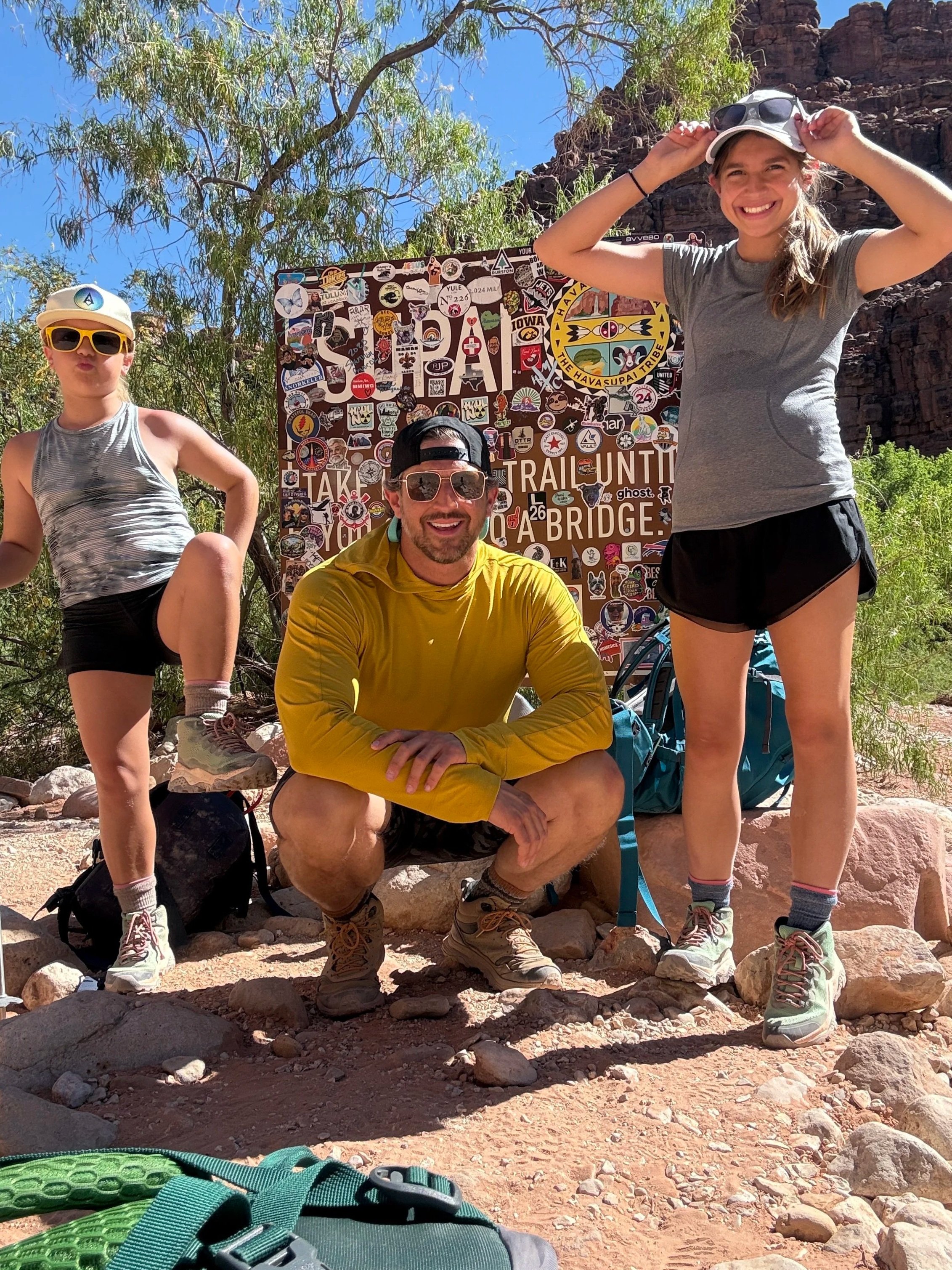
Around mile 6 you will reach a split in the trail/canyon and see a sign for Supai village. You will turn left here and follow the trail another mile to the entrance of Supai village. There is cell reception for some carriers and there is a cafe with wifi and a general store. Signs are posted that there is no photo or videos allowed of the people, animals or buildings of the village.
After you walk through the town you continue along the water and the descent begins again down to Havasu Falls. The trail here is softer and more sandy but can be hard on knees and joints as it is steep in a few sections. However, you are almost there and when you hear the roar of the falls the feeling you get when you see it is powerful.
Campgrounds
At the bottom of the falls is the start to the campground. There is a ranger station here but it is not always tended and there are signs indicating all of the rules. This is also where the mules drop the bags if you have gone the route of having them take your gear. Note* there were several people who waited a long time to collect their gear. While the mules don’t take nearly as long to make the journey they are not always on a strict timeline and get there when they decide too.
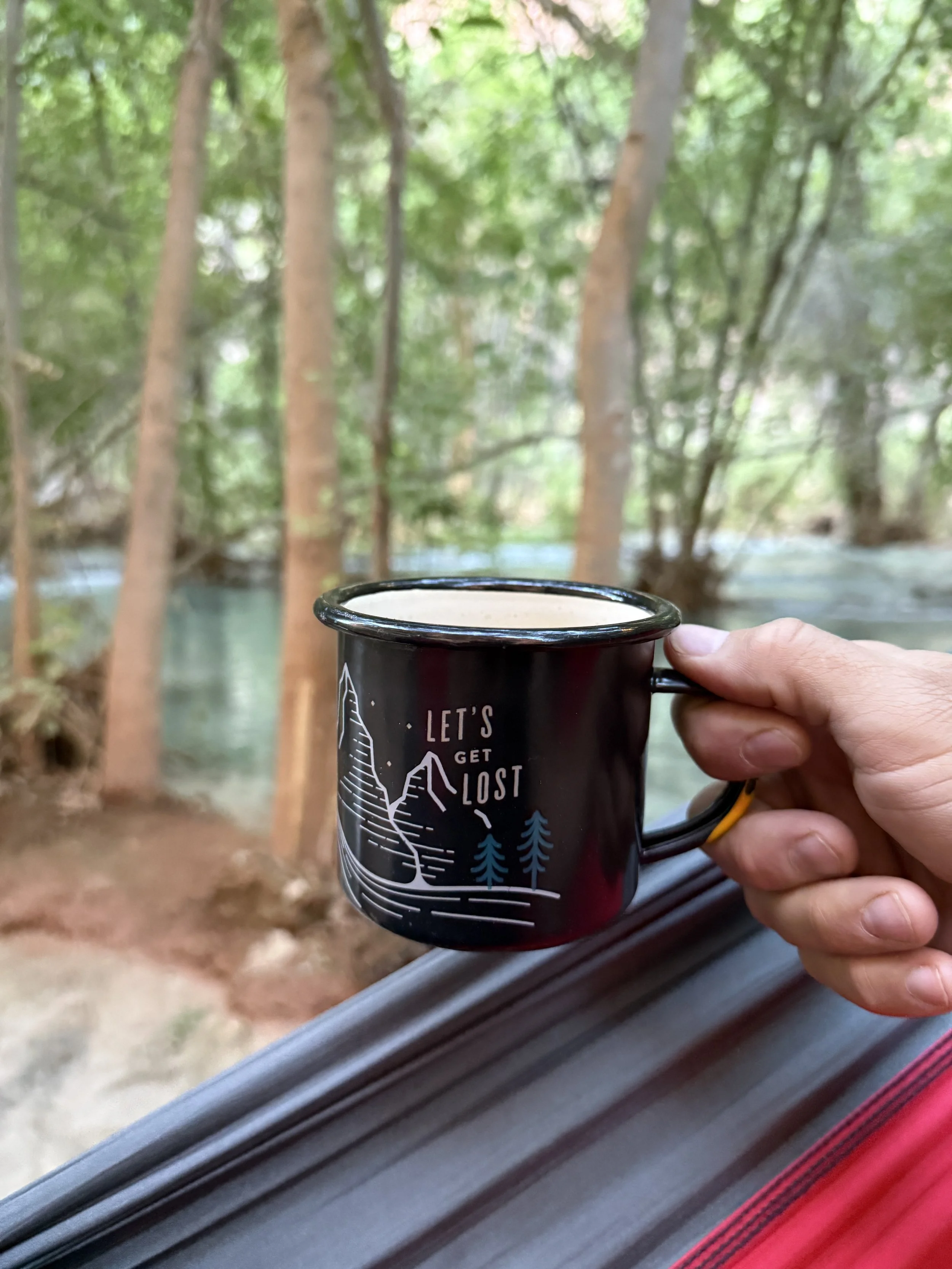
There is a gate you enter and the first set of bathrooms. The bathrooms are compostable toilets and are maintained by the tribe and we found them to be relatively clean. As you walk along Havasu Creek there are plenty of campsites. The first area is better for larger groups and there are many picnic tables. As you continue on if you’d like something more private, we’d suggest going to the other side of the creek at the first crossing and look for spots towards the end near the second and third set of bathrooms.
There is an abundance of wildlife that lives in the canyon. Including rodents and critters who love to get into your stuff. There are metal mesh rat sacks that can be purchased at the Grand Canyon Caverns market or you can purchase them ahead of time. We did not use them and instead hung our backpacks from a rope on a tree and this seemed to work just fine. The camp is pack in and pack out, so make sure that even your micro trash is collected. We brought a few gallon zip lock bags that we folded and tucked all of our trash for three people for three days into. It was plenty of room and helped limit the smell.
There is a spring (Fern Spring) with signs towards the beginning of the campground. Water filters are great if you’d prefer to filter water directly from the creek however the spring water was sufficient and we did not have any issues.
Havasu Creek
Once your camp is set up, it is time to explore the falls and the creek. There are a few rope swings and river crossings. Half of the fun however, can be wading across and exploring the creek up and down in the water. SAFETY NOTE* (This is very important). The creek runs from the bottom of Havasu Falls to the top of Mooney Falls. While the creek is mostly shallow and knee high there are few spots that are deeper. The end of the campground and where the water pours over Mooney Falls can be deceiving. The drop comes quickly and there are no signs that say, you are close to the top of the water fall. If you are going to play in the water do so well above the end of the creek so you are not in any danger of the edge.
Mooney Falls
One of the best parts of the area is the massive 196 foot waterfall Mooney Falls. Getting down to the base however, is not a hike — it's a descent. You go through two short tunnels carved into the rock, and then you're on a near-vertical travertine wall working down chains, iron stakes, and old ladders bolted to the cliff. It's about 200 feet down. The rock and the chains are wet and slick from the spray the entire way, and it's genuinely exposed. It is beautiful at the bottom. It is also the one spot on this trip where a mistake has real consequences.
So, the go/no-go with kids. Ask yourself honestly: is your kid comfortable on a ladder, and do they follow instruction when they're scared? If yes, they can do this. If your kid tends to freeze or panic halfway up something, this is not the place to find that out. Only one person on a section of chain at a time. Put an adult below your kid and an adult above. Go slow, and go early before the two-way traffic stacks up and people are trying to pass each other on the ladders.
Pro tip* Bring a pair of cheap grip gloves. The chains are muddy and wet and your hands will thank you. Wet water shoes with real tread beat sandals here.
If you make it down Mooney, Beaver Falls is the reward — about 3 miles further down the creek, a series of terraced turquoise pools that most day-trippers never see. It's a full day out and back with several creek crossings, so pack water, snacks, and water shoes, and set a hard turn-around time. You do not want to be climbing the Mooney ladders exhausted at dusk.
And if you look at that wall and decide it's a no with your kids — that's a completely fine trip. Havasu Falls and the creek are the heart of this place. Skipping Mooney doesn't mean you missed it.
Gear
What to pack is always the question. If you are a seasoned backpacker your instincts will guide you. If you are newer to back country and backpacking trips, here is what we packed for three people. A 41 year old man, and 11 and 13 year old girls.
Shelter and Sleeping
72l backpack (this is my standard pack. You do not need a pack this large but its what I’ve always used and it was about 70% full). 60l backpack (this was also slightly larger than needed for my older daughter and was also about 70% full). 45 liter backpack. Three sleeping bags (we were very hot even in the night and mostly slept on top of them). Three man Coleman tent. Dual wide Klymet sleeping pad and single wide inflatable sleeping pad.
Cooking
Jet Boil with fuel can, 2 pack of metal bowls, three long spoons for eating directly out of the dehydrated packets, 3 insulated coffee cups for hot chocolate and coffee each morning. Sawyer life straw for easy drinking, 2L platypus water bladder, three 1l and 2l Nalgene bottles.
Food
15 mountain house dehydrated meals (Costco sells these online and is a great value for around $80). 6 Starbucks coffee packets, 15 liquid IV packets. Assorted snack packs and trail mixes from The Women’s Bean Project (Get the Thai Curry Cashews and add them to the Pad Thai dehydrated meal from Back Country Kitchen). Peanut butter pretzel bites, gummy worms and beef jerky.
1 deck of cards, Cascade string lights, hammock, treking poles, two 5L dry bags (we only need one), camera tripod, emergency first aid kit, sunscreen, three headlamps.
Clothing
Three pairs of socks including one pair of toe socks. One pair of underwear and athletic shorts, two pairs of quick dry athletic shorts with built in liners. One hooded sunshirt, one t-shirt, two tank tops, one hat, one buff, one pair of Chacos or Crocs, one pair of hiking shoes.
All together our packs weighed about 70 total pounds without water. Mine was 30 lbs and each of the girls was about 20lbs.
Taking Kids and the Hike Out
People ask what age a kid needs to be. There's no magic number, but here's the honest version: this is less about age and more about whether your kid can hike 10 miles in heat and keep their head when they're tired. Mine were 11 and 13 and did great. I've seen younger kids crush it and grown adults get carried out. If you have a smaller kid or a hesitant hiker, put your gear on the mules and let them hike with a light daypack. Removing the weight changes everything.
Going in is the easy part, and that's the trap. The descent is downhill, it's dark and cool, and the kids are amped. They'll burn all their gas in the first flat miles because it's fun. We stopped every couple of miles whether we needed to or not. You will inevitably end up walking a lot of the next few days. We hiked a total of 35 miles in four days. From filling water at the spring, back forths to Havasu Falls or down to Mooney and Beaver falls you’ll take a lot of steps so after three days of running around, legs will be tired and you’ll still have the hardest part of the trip coming up.
SAFETY NOTE* It's roughly 2,400 feet of gain, and the last mile is a wall of switchbacks straight up to the Hilltop with zero shade. This is where the day goes sideways for families — spent kids, full sun, no water left. Reverse everything you did going in. Be hiking by 4:00 or 5:00 am. Carry more water than feels reasonable. And tell your kids the day before exactly what that last mile is, so it's a plan they signed up for instead of an ambush. Ours climbed it without a single complaint, and I'm convinced it's because they knew it was coming.
What I'd Do Differently
We got most of it right, but a field guide that pretends the packing was flawless isn't worth much.
I'd cut weight, and I'd cut it off the girls first. I’d eliminate the bug spray, the water filter, and would bring two pair of shorts not three. For the climb out, every pound on an 11-year-old is a pound working against you at mile 9. I’d leave at 4:00 am instead of 4:30. I believe it is important to earn the experience by hiking in with packs however, since that has now been accomplished, on a return trip I would hire the mules to take our gear. We’ve got the badge and don’t need to prove anything.
Specific cuts: we hauled three sleeping bags and slept on top of them every night because the canyon stays warm — I'd swap those for lightweight liners or quilts and save a ton of bulk. I brought two 5L dry bags and only ever used one.
What I'd keep exactly as-is: the insulated cooler with frozen drinks waiting in the car, the ziplock micro-trash system, hanging the packs from a tree instead of buying rat sacks, and camping over the lodge.
So that’s the trip to Havasu Falls. It's expensive, the permits are cumbersome, the hike in is long and the hike out feels longer, and there's a real chance you show up to muddy water. None of that is me talking you out of it.
I'll tell you where it landed for me instead. Mile 9, the last wall of switchbacks, full sun, both girls out of gas — and they just kept climbing. Eleven and thirteen, no complaining, no quitting. We came over the lip at the Hilltop and stood there in the dirt of the parking lot, wrecked and filthy, and I watched them realize they'd done the whole thing on their own two legs. Nobody carried them. That's the part I'd sign up for again tomorrow. The water is why you go. Watching your kids find out what they're made of is what you actually bring home.
Do your homework, respect the canyon and the people whose home it is, keep your kids safe, and we hope you have the most Epic Dadventure ever.