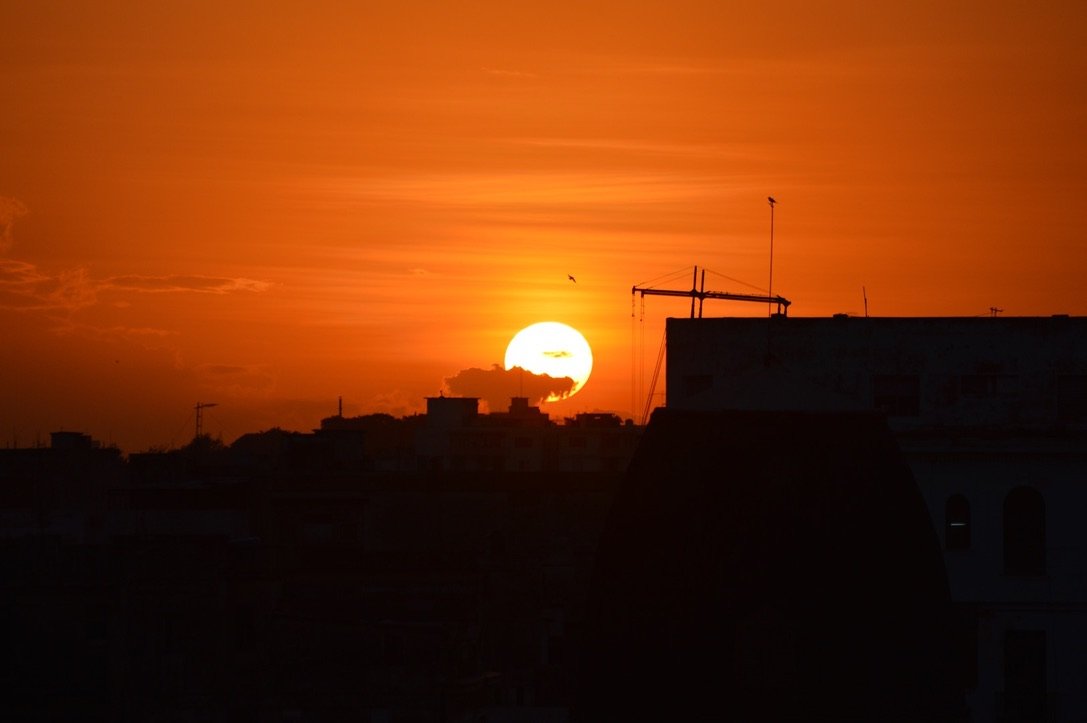
Havana Panorama - A Cuban Experience
I’m sitting in the small, quaint kitchenette of Elaina the madre of the host family I am staying with in Havana, Cuba. The walls are a soft peach, with white trim. The décor is full of Cuba and its history. To my left are stern blue French doors that lead into an atrium with a staircase up to my room. On one end is a wall full of books that look decades old; they are full of dust, some of them falling apart. I pull out the Iliad by “Homero” and the book feels like it will disintegrate in my hands if I am not careful. There is a refinement and sophistication to Elaina that tells me she has read it and many others as she talks about her favorite books. These books are all part of a history that has informed her life story and if she told it, it would be a story worth hearing.
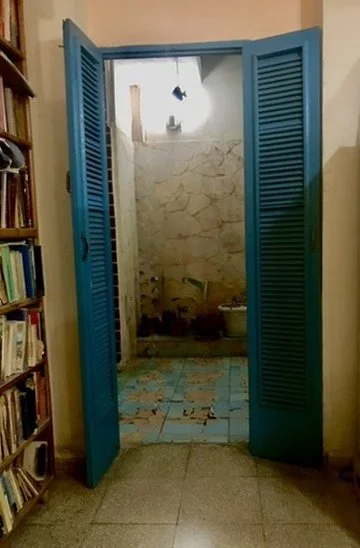
Isabella is Elaina’s daughter. She is twenty three and wants to be a filmmaker. She tells me that her grandmother is about to have surgery. In the back part of the kitchen - which I thought was a dead end- rather, holds five or six people who are performing a religious Yoruba ceremony. The people in the back emerge and shake my hand as I sit at the table drinking my cheap bottle of rum. Havana Club Anejo Especial. I bought it for 8 cuc or about $10. I thought I needed something to share with the family when I came back home each night from my day of sightseeing and endless walking. So far, Raul (I can’t figure out his family relation) is the only one who wants any and he mixes it with his coffee as though it is something he drinks fairly regularly. “Carajillo” he says, and lifts to cheers. “Salut” I say as we drink. He has a soft and relaxed demeanor and seems like the kind of man you know you can always share a drink with. Someone with stories and a face full of joy.
Three of the men go back into the kitchen and start singing in a sort of religious chant. Isabella is working on her homework next to me at the kitchen table and I ask what they are doing now. There is a loud screech that interrupts her before she can answer and Isabella scrunches her face and shoves her hands to ears. I realize they have some sort of animal in the back and understand what is about to happen. I ask Isabella if it is okay if I watch. She says yes.
I walk to the back room to see three of the original six standing in a semicircle. The man who might be the priest (I learn later that all three of them are technically “sacerdote” or priests) continues singing. I stand and watch as the youngest priest who looks about 16 years old, with braces, soccer jersey and green brimless religious cap holds the rooster by the feet and slits a bird’s throat. There isn’t as much blood as I expected, and he holds it over a stone cup on the floor to catch the blood. The bird flailing in his hands slowly stops.
What a way to start my first day in Cuba….
The three of them sing for a few minutes and then the father of the home, Ramon, walks back to the other room while singing and motions towards my bottle of rum. He moves slowly, with a sort of shuffle to his pace. I pour him a glass and he goes back to the ceremony where he dumps it over the rooster's neck followed by a glass of water. He then grabs another small bottle of rum on a shelf behind the Kirkland brand Fish Oil supplements. I notice the irony of the massive bottle of vitamins in a country with so little. I can’t tell if the liquor bottle is some sort of moonshine or religious brew, but he doesn’t seem to need it after he pours mine all over the now dead bird.
The priest, or the guy who I only thought was a priest is holding a bag. Where it came from I have no clue, it seemed to have appeared out of nowhere, and there is a dove inside. He pulls it out and Ramon turns in a counterclockwise circle while he waves the dove up and down in a fanning motion over his body.
Ramon motions for me to turn and I eagerly turn the wrong way. He spins me the other way… “counter clockwise jackass” I think to myself duh… and waves the dove along my body. They yell for Raul (who I’ve now discovered is an Uncle) to come. He lazily walks in from the living room. His attitude as if he is only pacifying the others. He spins with a “ya, ya, ya okay, okay, I’m clean now” smiles and winks at me as he walks back to the living room, I assume to play more solitaire on the family computer and drink rum. He sarcastically looks back at me and in broken English says “I’m young now” with a wide grin.
The dove is given to the young priest and in a single motion, with no hesitation he rips the head off. I wasn’t expecting that. I was anticipating some sort of religious duality, or a spiritual binary. One chicken to sacrifice, one bird to cleanse. But no, it’s dead. I’m asking myself why I would have thought otherwise. It has been 10 years but I’ve been part of indigenous religious West African ceremonies when I spent a month in Ghana studying in and doing research in graduate school (Yoruba originated from present day Nigeria). My experience being that when an animal is introduced, it’s probably going to die. The singing seems to continue for a while so I walk back to the dining room table.
Raul enters the room in his blue soccer.com T-shirt. “Paul, Paul (pronounced ‘pawool’, ‘pawool’). He motions with his empty glass. “Mas rum?” I say, practicing my Spanish. “no, no, no” he says in a halfhearted way. Like “nah, twist my arm”. He takes the bottle and pours himself another hefty glass. Raul is definitely the fun uncle and now I’ve been cleansed. I’m young, like Raul.
Isabella’s grandmother is told to come get hers. I’m wondering where she’s been this whole time, after all this is her ceremony. She comes in with a pious look, stone cold but also ready. There is meaning to what she is doing but she is also a little concerned, like “I need protection for this surgery” kind of look. Or at least that is what my assumptions tell me. But then I learn she already had the surgery…. Wtf…. I don’t understand anything that is happening now. She spins, gets waved and leaves. Isabella goes in next, spins, gets waved and moves on. The priests continue to sing and then clean up.
Later I am in the kitchen and the number of people in the house seems to have doubled. They are all crowded around me and talking in Spanish, trying to explain to me what happened. While Isabella translates, Elaina comes in, grabbing the bottle of rum I gave her the night before as a gift, opening it with a “let's party kind of motion”. It’s all very chaotic. This family is really interesting and at the same time there is something so normal about them.
I learned that the man who I thought was the only priest is Omar. He smiles at me and says goodbye. He shakes my hand and leaves. Slowly people begin to disperse and I’m left in the empty kitchenette with Isabella. Raul comes back in, “pawool, pawool, no mas, no mas” as he laughs. He can’t already be done with his drink? No, He just likes his jokes. Probably because I laugh at them every time. But I have to laugh; on my first day in Cuba, I watched three guys cut off the heads of a chicken and a dove in the kitchen of my host family. It reminds me of where I am.
I am in a country where history, politics and religion are real. By “real” I mean that there are consequences to all of them here. Real consequences. Cuba’s history still exists to this day. Their revolution was a handful of decades ago but is alive in the hearts of the people. Everything harkens towards it. Whereas the American Revolution is mostly a relic. The only people clinging to the meaningfulness of the late 1700’s are those who pretend they care. But really, only care when it serves their sense of purpose in the comments section of an online argument or to garner more votes. It reminds me of when I was a teacher in Rwanda after college. Everything you heard from Rwandese was that they wanted the world to know that the country was a safe and clean place and that they didn’t want it to be synonymous with genocide. Yet you couldn’t walk 10 feet in any direction without some sort of visceral reminder that one of the most brutal genocides took place. Pay no attention to the man behind the curtain…
Back in Cuba, I was thinking about how politics has big implications. Real implications. American politics are embarrassing and we can say that. American politics are embarrassing and we can say that. We can criticize our presidents, mock our parties, write angry op-eds about whoever is in office. We can believe it, we can say it, we can write it. Cubans barely have internet access. So while we think that our freedom to march in the streets for our beliefs is wonderful, at the end of the day no one would even know it happened if we didn’t have the ability to share it on a mass scale.
Their religion is real. Real because they cut a fucking chickens head off to ensure Ramon’s triple bypass surgery stays successful. Dear American Christian, I see your communion and rock concert worship service and raise you a teenage boy with braces who broke the head off a dove… Ozzy Osborne style.
As I sat thinking about what I had just witnessed. Isabella asked if I wanted to stay for dinner. Ramon sits down at the head of the table. Raul passes through, cracking another “no mas” joke.
When I come back from washing my hands a plate of chicken and rice is waiting for me. Ramon walks to the refrigerator and pulls out a jar. “You like?” he says with a giant grin. It’s peanut butter. “Si, me gusta” I say eloquently in Spanish. He walks over to the table and sits down with a giant pancake, smearing peanut butter all over it. I’m thinking “breakfast for dinner?” I thought that was only an American thing.
We enjoy some conversation about American classic rock. It turns out that Ramon was a director for a radio station in Cuba for years. “I love John Denver '' he says. We rattle off great musicians of the 60’s and 70’s. Creedence Clearwater Revival, Aretha Franklin, The Rolling Stones. Ramon pauses when I say Jimi Hendrix as if I just gave a winning lotto ticket. “I love ‘yimmy hendrix’” he says.
We continue talking and I ask why Ramon is eating pancakes. “It's an omelet,” says Isabella, with disgust on her face. I’m thinking to myself “what is so bad about an omelet… oh… peanut butt- “Really?” I say with a note of slight confusion. She revoltingly says, “he puts meat on it too”… Ya, that’s pretty gross. Ramon doesn’t care though. He just cut the head off a chicken in his kitchen. Maybe secretly, pollo y rice isn’t exactly something he wants right now.
After dinner we sit and talk about music, movies, politics… Yes, politics. The Revolucion, Batista, Castro, Che Guevera, Barack Obama, Donald Trump, and Saudi Arabia. Isabella, loves the movie All the President's Men with Robert Redford about the Nixon Watergate scandal.
She asks if I want to come and throw something into the sea with her and her father. “Uh, throw something into the sea?.... Okay.” I think, why not?. I learned that Ramon needs to get some exercise and there is a dead chicken and dove in the back of the kitchen that apparently needs to be disposed of. They blame it on religious reasons.
I ask how long Ramon has been a Yoruba Priest. “Nineteen years,” he says. He says he did not believe in anything spiritual or religious before. I ask how he became one and he goes into a long continuous story in Spanish and the translation gets muddled. What I gather is that he was walking one day and a strange woman came up to him and said she knew a particular fact about him only he knew (I can’t get what it was out of him). Later, another woman read him a tarot card that confirmed what the first woman said and voila… Yoruba Priest.
About 30 minutes later we left the house. We take Tristan, the family dog who is about the size of three or four rats and only looks about 10% chihuahua. He is cute though and I found out that Isabella rescued him when he could barely open his eyes. She doesn't know how old he is. According to Elaina he’s four. Ramon says he is six. Gabrella says they are both wrong but still doesn’t know his age. I can’t stop thinking “okay, how old were you when you found him?”. I never get an answer. I’m reminded of something that I’ve learned from my travels and that is in impoverished countries, details cost more. People are not interested in providing details too much because they aren’t necessary.
It is a gorgeous night in Havana. The temperature is 70 degrees with a soft Caribbean breeze. The streets are quiet, and we walk slowly down the Paseo del Prado. Most of the colonial style lamp posts that line the streets are unlit. Isabella and I talk about her family, she asks questions about mine. Ramon tries to keep up and we stop every five minutes to let him catch his breath.
We make it to the Capdevila which is near the Museum of San Salvador De La Punta, a historic fort that looks centuries old. This whole time Isabella has been carrying the dead birds in a plastic grocery bag. I’ve been wondering to myself the whole walk “is she going to throw that bag in the ocean?” I know she is going to. Why do I care though? For some reason it is so unnerving. What about the sea turtles? Wouldn’t it at least be better to dump the carcasses in the water? At least the fish can get to them and the Great Circle of Life can go into effect. I’m such a hypocrite though. Like my carbon footprint isn’t 100 times that of this family's occasional plastic bag in the sea. Starbucks uses paper straws now and I go to Starbucks regularly so… you know, I’m doing my part.
We get to the edge and she chucks the bag into la mer. Like trash into a big dumpster. The sea is a big dumpster apparently. I’m still so bothered by this scene. But this family is so wonderful that their lack of “greenness” doesn’t matter. I realize that being conscientious about the ecosystem is sometimes a luxury.
The walk back is benign. “Why don’t you cook the chicken?” I ask, my conscience still harping me. Isabella doesn’t know and goes into a story about how she barely eats chicken because of her experience watching them get slaughtered.
In Cuba, what you see is what you get. I’ve also been told that nothing is as it seems there. People will tell you, things are not so great. “Two years before Obama left office, there were many tourists,” says Isabella. Now, not so many. I asked a man earlier in the day if things were getting better. “No,” he says with a sense of despair, “but the United States economy is good?” he asks. “meh” I say. Who really knows.
The next morning I wake up to a pitch black room with a sliver of light coming in through the atrium ceiling outside my room. Today is Halloween. However, it seems to mean nothing here. I make my way downstairs and meet an elderly couple from the Netherlands who are renting out one of the other rooms. We have a friendly conversation over breakfast before I head out for the day.
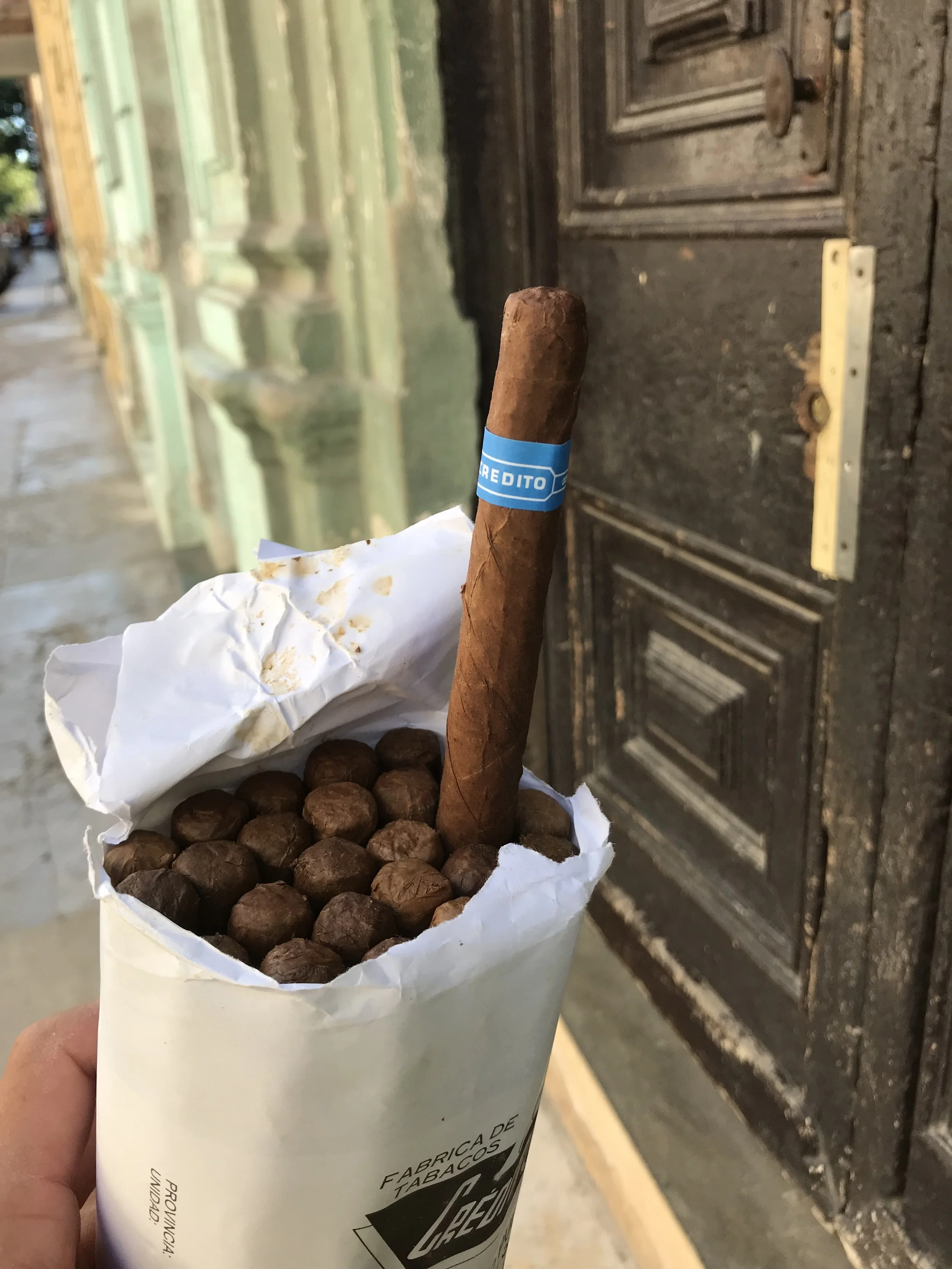
I asked Elaina if she recommends a good place to get cigars. She comes back from the other room with a bag of stogies and tells me that these are the real cuban cigars, meaning that these are the ones cubans smoke. I don't recognize the brand but then again wonder why I think that should matter.
Later that morning, I find myself on the bus outside of the Hotel Inglaterra on my way to playa Mar Azul. I’ve met two sisters from England here on vacation. We remark on how we just realized that tonight is the night of the dead, we try to talk about it in any meaningful way. Our attempts to come up with something interesting to say are vapid and the conversation fizzles out. It seems to be understood that missing a holiday like Halloween has little importance.
The drive to the beach is about 30 minutes from Havana. I’m sitting next to a short Cuban man with a New York Yankees hat and shirt. His name is George and he is here with two of his childhood friends. One of them moved to France and then Switzerland in 1968 and has only been back twice. But the three of them have maintained a strong friendship throughout the decades. They were all wrestlers. Jose was a champion in Cuba 40 years ago. “68 kilos” Says George, “me, I was 56 kilos”. Alex who moved to Switzerland is a strong man for 65 years old. He is bringing his son to Cuba for the first time to see where he grew up. There is a charming sense the friendship between the three of them. Like something out of the movie Stand by Me. George tells me that he owns 40 New York Yankees hats. “40?!... quarenta?” I say to clarify. “si, si, I looove News York. I wear everything News York. My daughter lives in Meeami and she sent me the backpack with News York, hats, and t-shirts…. I love News York”.
It is quiet for a while and I ask George what beach he is going to. He tells me that he is going to Atlantico but that the bus is 5 cuc and he only makes 11 cuc in retirement. “Here we go” I think. Waiting for the open palm. Trying to guilt me into paying for his ticket. He tells me that he was a jeweler for his career and fixes watches but it never comes. He never asks me to pay for his bus fair. Perhaps it’s because his friend from Switzerland is paying. On another day he might have asked but today it is refreshing and it allows for us to continue our conversation without the gnawing thought in the back of my head that all wants is for me to give him money.
Maybe it isn’t fair for me to be so cynical but I had enough conversations that were seemingly normal turn into a request for money more times than I can count in countries all over the world so I am biased even though it might be an unfair assumption. The people in Cuba genuinely love when they hear I am from America. Every time, their excitement is infectious and draws me into a conversation. It makes me ask myself, what was all the beef about anyway? I know the history, but even when learning about it in my high school government class, I remember not really caring. It’s the same today, as far as Americans are concerned… who gives a shit. I mean Cubans give a shit but they have to, it’s a daily part of their lives. American’s love to act so virtuously superior ‘uh the history of what the government has done to its people is so awful” one might say about Cuba as they text away on their chinese made cell phone in their car full of Saudi Gasoline.
My mom was concerned - the way moms get concerned - when she heard I was traveling to Cuba alone. She sent me a list of things not to do that she quickly Googled. “Don’t blow your nose in public, don’t take pictures of the police, don’t wear bling, and don’t diss Fidel because they don’t engage in political banter”. I’ve already done all of those. I don’t wear ‘bling’ but I do walk around with an $800 camera around my neck and backpack full of electronics. Millennial bling I guess.
What I do know so far is that a lot of Europeans come here, a lot of people from South America and Canadians love it here. Why is the United States so uptight about it? Is it really because of political history most Americans couldn’t explain without uttering some sort of incoherent sentence about communism, Fidel Castro, and of course you know that Che Guevara guy (wait who was he?) also #gauntanomobay
The beach is beautiful. It is everything you expect it to be when you travel to a Caribbean beach. Like Cancun, the Bahamas, or Meeami, without the infrastructure of course. The beer is cheap, the food is really bad and the hospitality is excellent. I walk along the sand for a while trying to get in my steps. I find a coconut and smash it against a giant piece of concrete and peel back the outer shell. I am going to take this back to the casa with me and throw it into my backpack.
The beach is clean. Pristine actually. However, I’m half expecting the plastic bag of dead chicken to wash up next to me and remind me of what happens when you litter. But of course it doesn't and the mirrored reflection of the endless blue sky above eases my mind with its beauty. A great place to be alone and think. You can sense that it hasn’t been polluted and overpopulated by decades of tourists and development or maybe these commies just do a good job of making sure people don’t throw trash in it… with the exception of Yorbua ceremonies.
I spent some time thinking about my own situation. Why Cuba? Three months earlier I sat at my computer looking for the perfect place to travel. I knew the dates and the reasons but didn’t know the location. It had been almost a decade since I had seen another part of the world. After college I’d done a good deal of exploring. A backpacking trip through Europe, a honeymoon in Mexico and then a year in Rwanda. During that time I explored all of the East African countries. My heart was full and every time I stepped into a new place I felt meaning and purpose and like I was actually living my life rather than just going through it.
Fast forward and now I was a dad, divorced and desperate to get back out in the world. “Where do I want to go?” It was an easy answer - everywhere - but sometimes easy answers make for hard decisions.
I started looking at the interactive map on an airline website and saw Havana, Cuba with the price hover over it and the moment I saw it I knew… that’s it. That’s where I should go. Life has a funny way of revealing itself and I find myself continually satisfied when I take the time to pay attention to what it’s showing me.
Back on the turquoise shore, I re-emerged from the recesses of my memory and my journey to my current moment. I make my way back to the beach where people are laying out and find the two sisters. We sit and talk about traveling, work and what they’ve done on holiday so far. It is all very typical for them. Cuba is a place you just go visit. The same attitude we might take towards going to Jamaica or Cabo. I make a joke about how some Americans think Cuba has armed guards waiting to hunt them down the second they step off the plane. When I landed, I was more struck by all of the women processing everyone through customs. It was all young women, dozens of them huddled in groups all wearing the same sexy flight attendant outfit or costume. Like something you see American women wearing on Halloween, a day like today.
I make my way for lunch to a hotel on the beach a few hundred yards from where I am. There is a live band playing afro Cuban music. I walk away from the beach to a hotel. It’s small, two floors and maybe 50 rooms at the most. The pool is nice and there is a bar to my left. The man half asleep in his white plastic chair stops me and asks for my bracelet. I tell him I want to get some food and he walks me up to the restaurant. As if he is trying to make sure he keeps all the tourists with their money out of the establishment. He’s just doing his job and rattles off some Spanish to the hostess. I’m guessing he says something about how the police will be here shortly to take the democracy loving American to jail where he belongs. The hostess is kind and tells me that it's 15 cuc for pescado or pollo, cerveza, agua, café and dessert. “Okay” I say. There is only one other option within about a mile so figure I don't have much of a choice. She seats me on the veranda and after a few minutes brings me a plate of fish with rice, green beans and mashed potatoes. It is probably the worst food I have ever had. I eat about half of it and decide I’ll just stick to the things Cuba is good at: coffee, cigars and rum.
After lunch I meet Wilbur, a fisherman who speaks very little English. He’s so excited to talk to me because I am American. He doesn’t ask for money but instead tries to show me a picture of the fish he catches on his cracked Samsung screen. I can barely see but it looks impressive. He is so excited to tell me that his father has lived in Miami for 30 years. He draws the number three-zero in the sand with his foot. He looks to be no more than 40. “Does he visit you?” I ask. “no” he says and motions with the wag of his finger. I can see why he is proud that his dad lives in the USA. He was probably a kid the last time he saw him.
It is getting late and I wait for the bus to go back to Havana. The tiny shack I’ve been buying “El Presidente” beers from all day is the only shade available while I wait for the bus. I switch it up and get a pina colada. It comes in what looks to be about the size of a plastic dixie cup, but it is tasty. Not what I expected for a $1 drink.
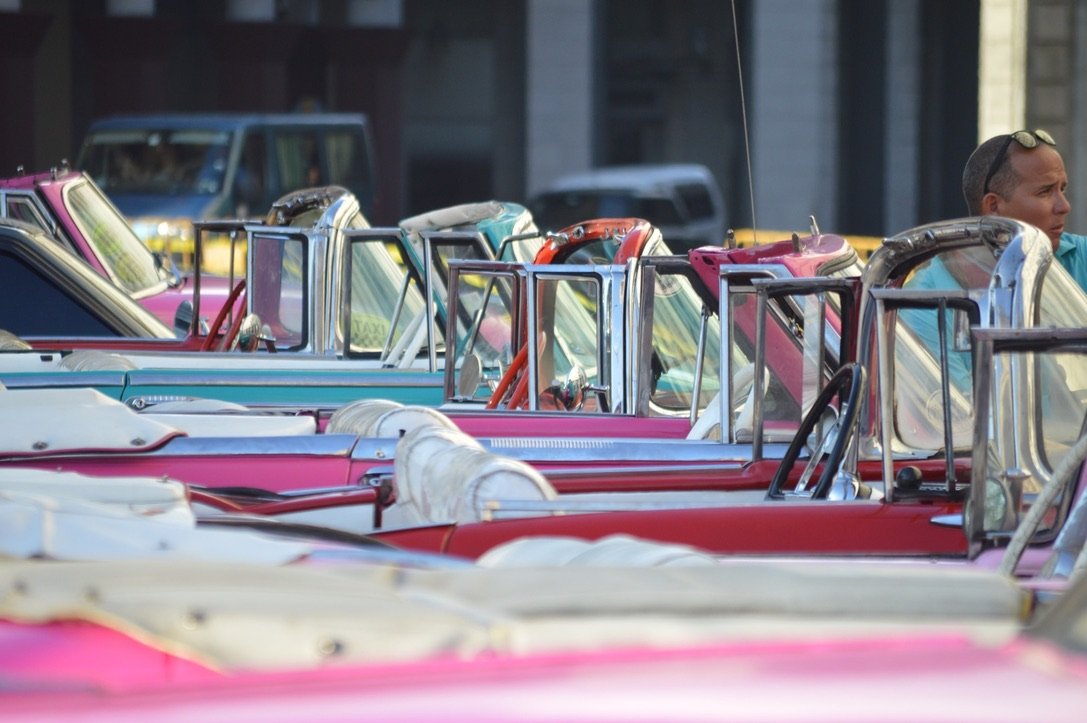
The bus arrives, and I find myself back in Havana. The Central Parque bus stop is brimming with people. The golden hour is about to set in and the city is absolutely stunning. The soft glow of the sun fades on the sides of the hotels and casts shadows on the others. It’s one of those moments you don't want to end. Classic cars in every color line the streets waiting for tourists to emerge into Havana’s nightlife. It seems like the city is getting busier by the day as we near the weekend. I walk back to the Casa of Elaina and there are 6 people I haven’t seen in the living room.
“Pawul!” Elaina shouts with excitement. Her pronunciation of my name is slightly different from that of others. “This is mi familia.” They look uninterested, I say hello and they go back to their conversation. I grab my bottle of rum and sit at the kitchen table. After a few minutes, I hear “pawool, no, no! haha”. Hell yeah. It’s Raul. He grabs a glass and I pour himself some rum. He sees my coconut on the table and asks about it in broken English. I try to explain how I found it and busted the outer shell on some cement. “You want to eat?” he says as he motions to the fruit. “yes” I say, and he disappears into the kitchen with the coconut shaking it to his ear to make sure it is good. A few minutes later he returns with a glass for the water and two halves of coconut. He takes my rum and pours it into the water. He grins and says salut.
___________________
In Cuba, they say “Havana has three million people and two million police.” They say it with a smile but I can’t help but wonder how much truth there is to it. There are a lot of police in the streets. My experience so far though is that the police are friendly. Often very young and happy to help give directions or translate. I think there are good and bad people in every profession. Good doctors and bad doctors, good electricians and bad electricians, good cops and bad cops. The United States being no exception. I am asking myself how does police corruption in America differ from Cuba, or South Africa, or Spain? On the bus George told me how he saw the Rolling Stones in concert a few years ago. “One million people went. Two million police''. I ask why and he tells me that it is because the government is afraid of what that many people in one place are capable of. In a place where there is next to no internet I guess that kind of makes a big difference.
The museum is three floors and seems to be organized by the most modern art moving backwards as you go up each floor. The last floor is mostly Renaissance paintings. Something I don’t think about when I am in Cuba. But the paintings remind me of the museums in Europe. Mostly oil, white people and their grandiose lifestyles… beaujouis.
I turn a corner and a large painting stops me. I don’t know why because it is a story I know well. A priest talking to a soldier, two friars looking up at the subject, a native man tied to a stake. It is a large canvas. At the moment I am hyper aware of my sensibility to this painting. I hate it and am so angry. It’s a portrait of a moment in time and I can’t stop thinking about how real this moment was. The last moments before this man was burnt alive, while priests and soldiers watched. I tell myself the lighting indicates that it is late morning. Nothing like watching a man burnt to death before lunch. I ask myself, “is the priest arguing with the soldier to let this man go? Or is his face full of contention and hate? Is he the reason the Indian is to be crucified?” I argue with myself until I no longer care. I have too many of my own problems to spend my emotional energy on a man being burned at the stake two centuries ago. But I feel guilty for not caring more.
I am surprised by the museum and how little the Caribbean Sea, the beach and the water are represented. The ocean is characterized in everything in other island countries. Here, it is all about Batista, Marti, Fidel and Che. But it’s also about suffering.
After lunch I wander over to the Museum of Tobacco. An elderly black woman with half a mouthful of teeth greets me with a beautiful smile. She tells me it is 5 cuc for a tour. She tries to explain in broken English that she offers the tour in English. I chuckle to myself at the irony. She is sweet and tells me her name is Martis or something like that. I nod and introduce myself. The tour begins with her explaining some of the obvious, a humidor here and a pipe there. I’m impressed by the statue of the God of Tobacco and the stone tablets used for printing the box labels in the 19th Century. One-hundred-year-old labels encrusted with gold are maintained behind the glass. One with William Shakespeare for a box of Romeo y Julieta cigars stands out.
I head out and find a taxi to the other side of the city. It’s the first car I have been in since my taxi from the airport and it feels nice to not be walking. We drive along the ocean with lights of Cuba's capital sparkling to our left. There is an exotic glow to the city and the night is full of Caribbean character. I get to the first bar that was suggested and I walk in. I am the only person there. I turn right back around somewhat bashfully. The bouncer is friendly and tells me the other places might be worth going to and I can walk. I make my way to two more bars. King Bar is half full with a somewhat sleepy crowd waiting for the night to pick up. I get the sense it is a place people start their night off before going somewhere else. I have a beer and leave. I ask around and it seems the place I need to be is F.A.C. It is the third bouncer who smiles and says it is a fun time. He gets me a taxi and the driver Daniel, start to talk to me about where he is taking me. “Fantasy, fantasy, es Bueno” I think I hear him say. I feel my heart sink “fantasy? That’s what they’ve been saying?” I’m picturing a strip club that the businessmen go to and hence why so many of the men have been smiling at me. The American man will have fun there, they think.
We pull up to a giant building. One half industrial, the other half classic European architecture. There is a line that wraps around the building 100 people long. I am relieved that I didn’t end up at some brothel but I am also concerned that I might be standing in line for hours. I get in the queue and ask a few questions to the two men in line. They are very friendly and want to practice their English. It is nice to talk with people but I am also guarded. What often happens is that Cubans hear you are a tourist and the grin on their faces says it all – an opportunity. It is not just Cuba, Rwanda, Mexico, Ethiopia… It happens all over the world and sometimes it’s genuine but my experiences have taught me it's about a 50/50 chance you’re going to get asked for money. How did I get so jaded?
Manny is a young handsome man with dark black skin and bright white smile. He is wearing a “I heart Florida” t-shirt and stylish sweatpants. Richard is a little lighter skinned with a little stubble, a gold chain and white San Francisco T-shirt with a picture of the Bay skyline. I think about telling him to be careful with his ‘bling’. There is a short woman with them who introduces herself but speaks very little English. She tries to explain how long the wait will be but then gives up and puts ear buds in her ears. After I chat with Manny and Richard for a bit the girl whispers to me that “she wants to go somewhere, “there it is. I knew it would happen sooner or later.” I say no thank you and she leaves. I ask the men where their friend is going. Maybe she is a little embarrassed or maybe it is just a numbers game and she is off to the next opportunity. Manny and Richard look at each other and laugh. They tell me they don’t know her.
We stand in line for 45 minutes and I get to know the two of them. They are friendly, they have a good knowledge of the world. Manny is a musician and construction worker. Richard used to work in a hostel and tells me that is why his English is pretty good.
We finally make it inside and I am immediately surprised and excited. Fabrique d’arte Cuba or F.A.C. It is a giant art gallery turned nightclub, with live music and different types of performance art. We walk in to a group of women in all black doing some sort of interpretive dance for about 20 people. They are imitating cats getting drunk and falling over each other. The audience laughs and people seem to be enjoying it. The brief performance ends and the crowd applauds. A short older woman in what looks to be black leotards and ballet shoes grabs a microphone and says a few words. She looks like she is the eccentric art professor who loves what she does. Before I know it, I am now in a circle with 20 people holding hands. She explains the rules in Spanish and I am lost. The first man in the circle makes a motion like he is drowning and yells in a funny voice. Everyone imitates his antics and yells. The girl to his left then does her own flailing and yell and everyone copies. “Oh, I’ve played this with kids before.” It is fun and different. I love the game because it is exactly what you would not find happening at a bar in any American city. Americans care too much about what people think about them to be vulnerable. Myself included.
Manny and I grab our Heinekens and wait for Richard to come back from the restroom. Manny explains what he missed, and he smiles like he is halfway relieved he didn’t have to show himself to a bunch of strangers. I guess we all care about what other people think about us.
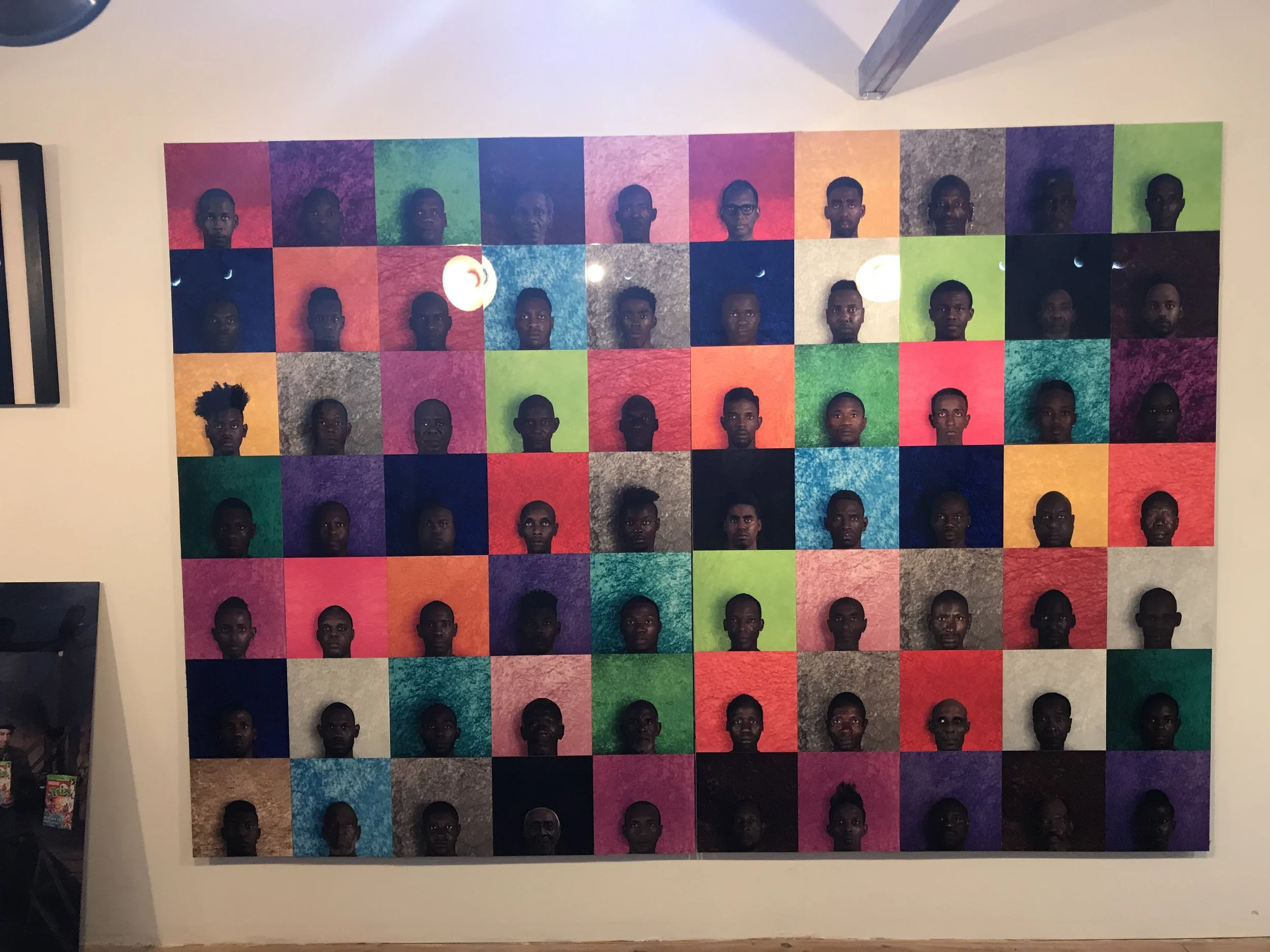
We wander into the back room down a hallway full of modern art where a large concert room with black walls, a large stage and dark lighting. The walls are covered with posters of great classic rock bands and musicians. The Beatles, The Who, Tupac, Bob Marley, John Lennon, Led Zeppelin, Joni Mitchell, Charlie Parker, Bruce Springsteen, Bob Dylan, the list goes on. It isn’t too crowded but after a few minutes more people start to crowd in as a young Cuban woman in a traditional dress gets up to the microphone and a band starts to play.
I buy another round of beers and try to talk with Manny and Richard. The conversation is pretty fluid considering the language barriers and the loud music. I want to see more of the club so we walk back towards the front where the staircase leads to the next level. The hallways are painted white stone, with concrete floors but it feels like a well lit catacomb or underground bunker.
Upstairs the mood is completely different. A 50 foot ceiling has some art hanging from it, there is a café in the corner and the main feature is a large stage with a big movie screen playing an artsy silent film. There are about 50 seats set up stadium style and half full. On the stage sits a grand piano with the woman playing music to the silent film. A man in all black sits on a short stool in the middle of the stage playing a drum. The room has a more elegant, sophisticated feel to it. The crowd seems to be a little older and well dressed. We only stay a few minutes and then move up to the main art gallery. Most of the art here is photography. The themes from what I gather are, body image, sexuality, freeness and unity. A 40-foot-long photograph of a close up of peoples feet on the beach is the focal point and my favorite piece of the exhibit.
Richard, is a little drunk and you can tell wants to make more jokes about the nudity in the art but knows it's immature and barely holds back. As we move to another photograph he says, “amigo, I want to say to you a question. What do you think this photo means?”. The picture is of five or six people sitting on two beds in a messy concrete room. The people are clearly very poor and dirty. Each one of them sits transfixed on the laptops on each of their laps. At their feet is a tangled web of internet and charging cables. None of them plugged in. An older man in the middle with gray hair and a thick mustache is talking on a cell phone.
I think about Richard’s question. I want to answer honestly but now I am much less interested in what I think it is about and more interested in what Richards thinks. He clearly has an opinion about it and wants to share. I say something about technology addiction. He smiles in agreement and tells me how he is confused that these people are clearly very, very poor Cubans but somehow they all have laptops. He is particularly amused by the man on the phone because it is an iphone. Not just a cell phone but an Apple product. I feel halfway, embarrassed about the iphone in my pocket that I am about to pull out and take a video of the room.
I think about his take on the photo though and harken back to similar conversations I’ve had about people in the states who are poor and have large flat screen TVs, sometimes one in every room. One thing travel has taught me is there is very little room to judge the poor. The poor don’t run the world. The wealthy do. Not that the wealthy should be judged either but as Christ said it is easier for a camel to walk through the eye of a needle than for the rich man to enter the kingdom of heaven…
Richard has opened the door to other topics of interest. I ask him what Cubans think about gay people. A few of the photographs feature two older women in love. Another one is of two gay men. He looks confused by the word “gay” and Manny clarifies by saying “homosexual?”. I clarify, “Yes. Are they allowed to get married in Cuba? Are people comfortable with them showing their love or affection in public?”. He says yes, very proudly. They both say that in Cuba it is okay, no one will bother them but they cannot get married. I have the same conversation with Isabella a few days later and she tells me that gay marriage is legal in Cuba according to the new constitution.
We make our way back down through the enormous club to another art gallery and a row of empty tables. Manny goes and buys a round of Heineken. I am grateful and appreciate the generosity. He doesn’t expect me to pay for everything because I am from America. I think Richard on the other hand is somewhat hopeful that I will keep buying the beer. Which I will. They are still both ultimately here because we have started a good friendship. Meaningful connection is what we as people really want in life. And here in Cuba, I have found that beautiful moment that we spend so much of our lives in search of.
I ask them about politics in Cuba. I want to know what it is like and what the people think of the new president Canel. I want to see their initial reaction when I ask if they like him. I am halfway expecting them to look around the room suspiciously before they answer in a hushed tone as if the walls are listening to us. They don’t seem phased by it at all. They both respond with shrugs of shoulders. “He has only been the president for a few months. We don’t really know much about what he believes.”. I ask if people in Cuba are allowed to disagree and I get mixed answers. I gather that you can disagree but you can’t express it openly. I ask, “can a musician write a song that goes “no me gusta el presidente. El muy mal. La, la, la”? They both laugh and smile but wave their fingers emphatically, “no, no, no. You cannot do this!” They continue laughing. I feel like I have a better understanding of where people stand with the government now.
We make our way to the area that was once an art troupe impersonating cats drinking rum and it is now turned into a dance floor with a DJ and a crowd of people jammed in like sardines. Most of the music is top 40 pop music. I’m not too thrilled but get more excited when it's switched up to more traditional salsa and Latin music infused with Bruno Mars and AC/DC.
After the rum I was out to find a painting. The art had surprisingly been one of the highlights of the trip. Maybe it was because of all of its pain and beauty or its history and war. It attracted writers like Hemingway and Hugo. Music was everywhere, even their cars seemed like an artistic form of expression. From 1950’s Russian made Ladas to classic Chevys and Fords, the cars are all restored to perfect condition and line the streets like an automobile show or an exhibit. The art spills out of the people and culture and yet somehow seems contained to the island.
I found a small shop with a number of large paintings. These were all very different from the ones I had seen in many of the souvenir shops all over the city. The artist was there to discuss his work and talk about the pieces. He was an elderly gentleman with a bald head and tank top. I found a bright blue piece that popped and caused me to stop. I remembered my dad once telling me that good art is something that makes you stop and think. It makes you linger. You might not be able to understand why but it's something that calls to you. I’ve walked by some of the most expensive pieces of art in museums and never thought twice about them but for someone that piece could be something that transforms their life, or changes something in them or causes them to think differently. While art can be transformative and can shape a culture or incite a revolution, art is also subjective. Much like how beauty is in the eye of the beholder. That is what the piece was doing. I couldn’t look away from it. I didn’t seem interested in the other pieces and I knew that it was the one for me. I sat in a plastic chair smoking a cigar while he took it from the wall and removed the frames from the canvas to roll up and put into a tube for me to take home.
I wandered the streets of Havana for a little longer. Trying to soak in my final day and savor the moments. I may never return to this city and so getting in as much as I can was how I savored my time. I picked up a few more trinkets for friends and family and decided to make my way back to the casa. It was late afternoon and I needed to pack up and get organized for my flight the next morning.
I returned to find Raul playing solitaire on the computer. He didn’t seem as interested in my arrival as usual. Maybe he’d grown tired of my presence and the jokes. I took a quick nap, a shower and got ready to go grab some dinner and drinks for my final night. I came down to the kitchen to see Isabella at the table. “Hola Paul” she said with a smile that hinted in a flirtatious manner. She was pretty and I could tell she was dressed up like she was ready to go out. “Paul, I’d like to show you around the city and take you to some places tonight”. I was a little surprised but loved the idea of the company, especially that of an attractive woman and a local where I didn’t have to think about where to go or how to get there.
We grabbed a classic pink convertible taxi and rode off west towards the setting sun. I recognized the route as we drove along the coast with the city to our left and the white buildings glowing once again from the final rays of golden hour.
We spent the evening talking about movies, America and Cuba. I finally ate some good food. Gabi was smart and more mature than I had given her credit for over the past week. Halfway through the night I realized that she was kind of taking me out on a date. We sat drinking mojitos next to each other after dinner. She got closer, put her hand on my leg and came in to kiss me. It was a soft kiss and then I felt her tongue against mine. I pulled away for a second with a sense of ambivalence. It felt good but felt a bit awkward. “Gabi, I didn’t realize this was where this was going. I’m like ten years older than you and… I don’t know… I feel a bit off. Your mom is hosting me and I want to be respectful of that and to her”. She smiled and gave a laugh. “Paul, me and my mom are very close. I told her I was going to make it with you tonight.” I choked on the gulp of mojito I had just taken and almost spit it out. In an attempt to not spit it all over her I forced it down as it burned in my throat and chest. Well this is a first, I thought to myself. “What did your mother say to that?” I asked with deep curiosity. A conversation like that seemed so incredibly foreign to me. “She said to not fall in love”.
We continued to talk late into the night until it was time to leave and hailed another convertible taxi. Once again a bright cherry red 1950’s Chevy in mint condition pulled up to take us home. I thought about how romantic of a night it had turned into when I had never anticipated anything like this happening. The salty ocean air felt good in the wind as it staved off the humidity and heat that lingered even now in deep hours of the night. A water droplet hit my head and then another. I looked through the windshield and could see a few hundred yards ahead the curtain of water falling through the street lights. Within a minute the downpour was on us. Gabi took her coat and ducked onto the floor to cover herself. I sat back, I tilted my head and felt the rain overtake me. It was the culmination of my trip. The perfect mix of liquor, beauty, freedom, adventure, sex, culture and knowledge. There is a quote by Anthony Bourdain that I believe in deeply. “Travel is not a reward for working. It is an education in living”. It had been nearly a decade since the idea had rung true for me and now I was back to where I was meant to be.
I don't want to take those moments for granted because while brief it is the little things in life that add up to make it rich and vibrant. Cuba gave me much more than tobacco, rum and coffee to bring home. It provided an insight into life. Not one just about politics or history but about connection and how we all are looking for the same thing. In Cuba I found a piece of that and what a beautiful thing it was.